


7 Reasons Your Back Hurts After Yard Work (And It's Not Your Age)
The blower isn't the problem — the weight distribution is
Most blowers are front-heavy or bottom-heavy. This forces you to lean your torso just to keep the nozzle off the grass. You might not notice it at first, but your lower back is working overtime to stay upright. Even a light tool feels heavy when it is out of balance. After 20 minutes, your back is doing the work your arms should be doing.
Your Shoulder Strap Is Doing The Opposite Of What You Think
You bought the strap to save your arms. Most days it does the opposite. Straps put all the load on one shoulder — the one that was already tired before you started. They pull your neck into an awkward angle and concentrate every bit of vibration into a single joint. Over time, that "help" causes more stiffness than it prevents.
"More Power" Isn't What You Think It Is — And Your Back Is Paying The Price
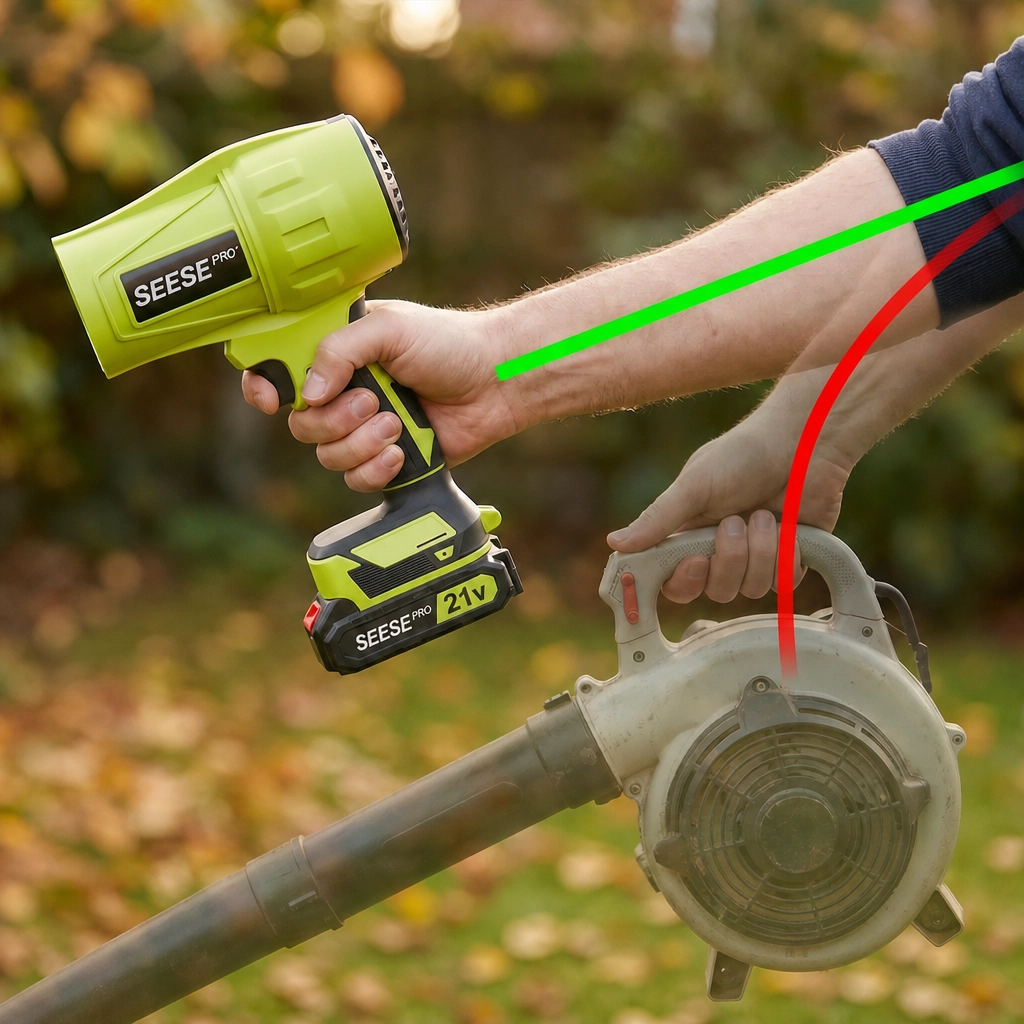
You just saw it at the top of this page. The small one moved the pile in the same 2 seconds as the big one. Same air speed. Same job done. So what is 'more power' actually getting you? A bigger motor, a heavier housing, a kickback you have to fight every single second. The gas advantage was never about air speed — it was about marketing a number on a box. After 40 years of buying the bigger one, your back has finally sent you the invoice.
The 4-Pound Difference That Changes Everything After 60
Most gas blowers weigh 10 to 12 pounds once you fill the tank. Carry that for an hour and you've essentially done 60 reps of a one-arm shoulder press. At 30, your body shrugs that off. At 65, it doesn't. Drop just 4 pounds and the math changes completely — yard work goes from a workout to a walk. That's the difference between dreading the weekend and looking forward to it.
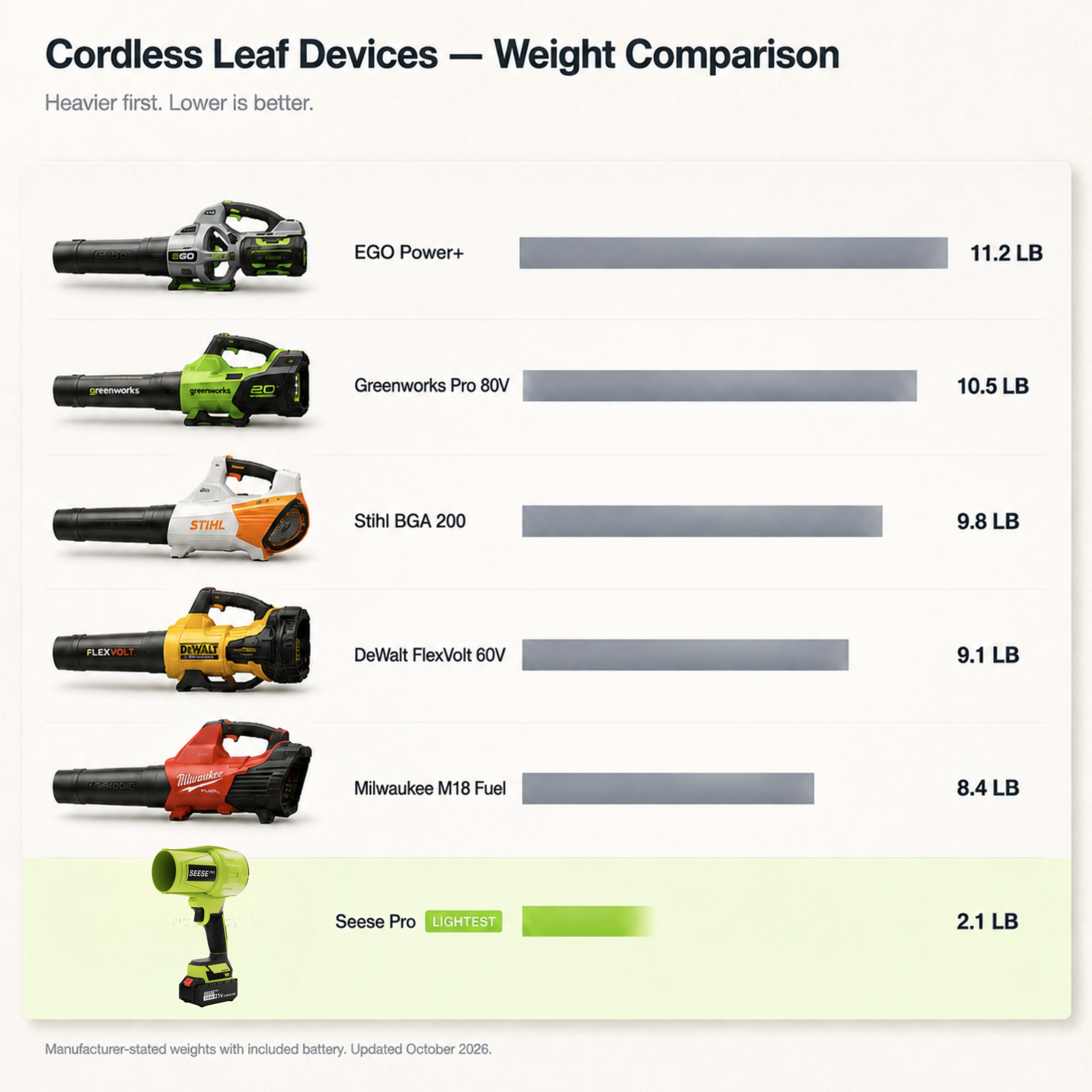
Cordless Doesn't Mean Lighter — The Trap Most Seniors Fall Into
Most cordless brands solve the run-time problem the lazy way. They bolt a 5-pound battery to the back end and call it a day. The result? You replace a 10-pound gas blower with an 11-pound "cordless" one that dips toward the ground every time you let go. The marketing said lightweight. Your wrist knows the truth.
Why "Ergonomic" Is The Most Abused Word In Power Tools
Every brand prints "ergonomic grip" on the box. Almost none of them design the grip for hands that have gripped tools for 40 years. Real ergonomic over 50 means three things. A handle thin enough you don't have to squeeze hard. A trigger soft enough to pull without thumb pain. A balance point that sits in your palm — not out at the nozzle. Most blowers fail all three. That's why your hands cramp before the job is done.
This Is What Yard Work Looks Like When The Tool Finally Fits You
After 40 years of wrestling tools that fought back, this is what it feels like when one finally cooperates. Driveways, decks, gutters, the car, the patio after a barbecue — the same 2.1-pound device handles all of it, with one hand, without your back, shoulders or wrists paying the price. Not because it's magic. Because it was built around bodies over 50, not around horsepower numbers on a box.
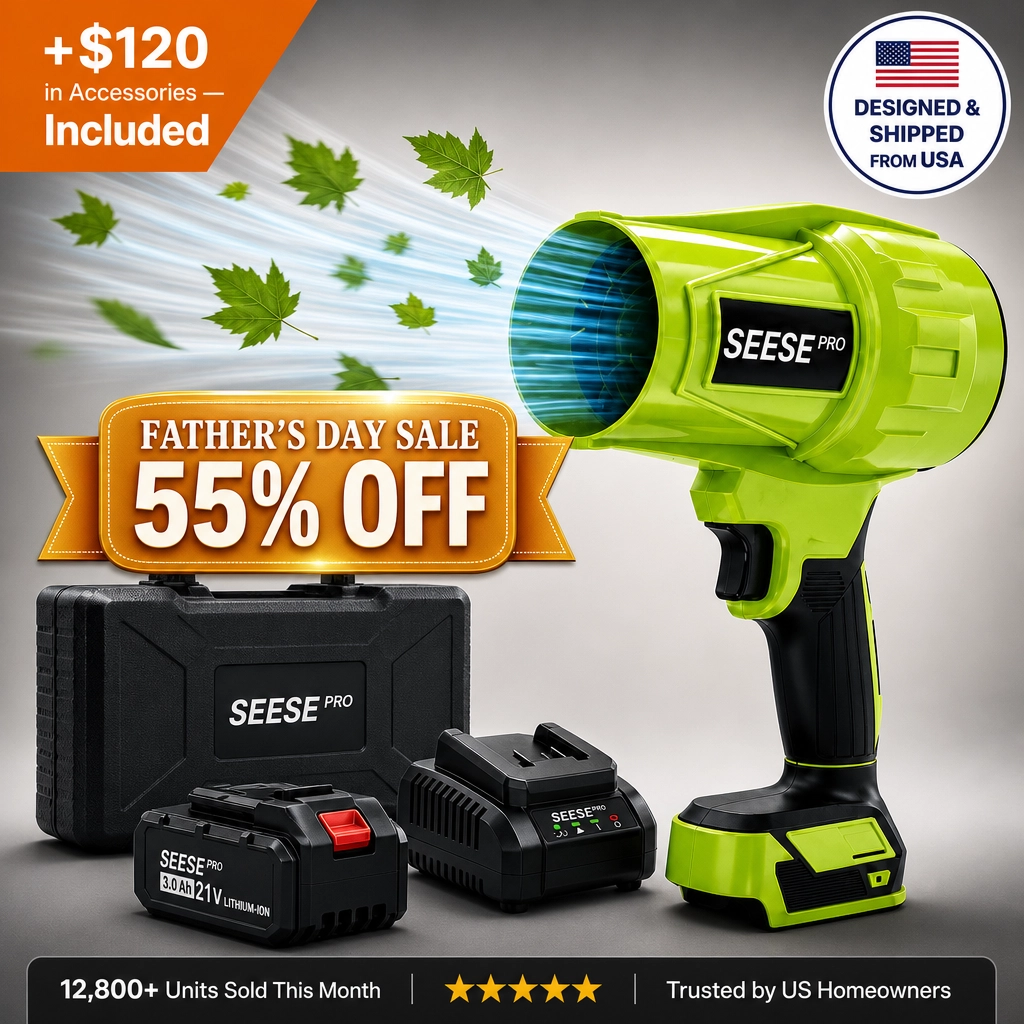
Built For Yard Work That Doesn't Break Your Back
Designed for bodies over 50. Center-balanced so it stays level when you let go. The cordless that doesn't add pounds to your wrist — now 55% off for our Father's Day Sale.
Real Homeowners Reclaiming Their Yards
See why thousands of people have switched to the Seese Pro to keep their independence this fall.
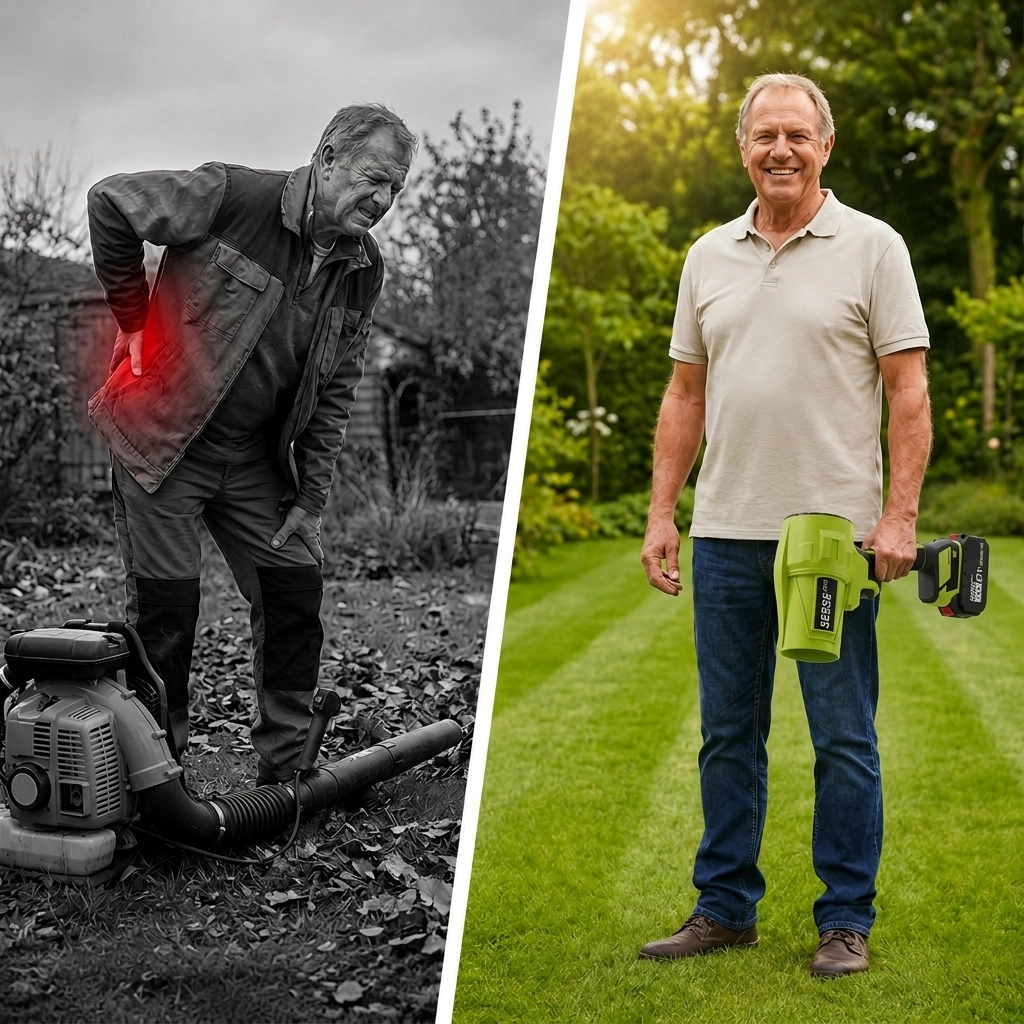
What to Expect
Using a tool designed for your body changes how you feel after yard work.
Your Questions Answered
Everything you need to know about the Seese Pro before this fall.